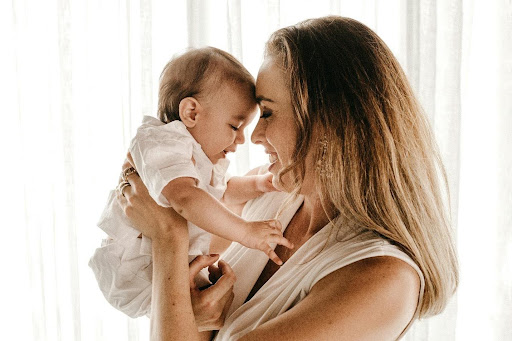
Photo by Jonathan Borba on Unsplash
Few things matter more to new parents than knowing their baby is healthy. Among the screening tests offered shortly after birth, the newborn hearing screening is one of the most important yet often overlooked. Hearing plays a critical role in a child’s early development, supporting speech and language acquisition, communication, learning, and social interaction. Identifying any hearing differences as early as possible gives families and healthcare professionals the best opportunity to provide timely support.
Ontario has had a universal newborn hearing screening program in place since the early 2000s, delivered through the Infant Hearing Program (IHP). In this article, you’ll learn how the program works, what parents can expect at each stage of the process, and how the Ear and Hearing Clinic supports families throughout the Waterloo Region.
What Is the Ontario Infant Hearing Program?
The Ontario Infant Hearing Program (IHP) is a province-wide program funded by the Ministry of Children, Community, and Social Services. It provides universal newborn hearing screening, diagnostic audiology assessment for babies who need it, and ongoing support services for children identified with permanent hearing loss, all at no cost to families.
The IHP is delivered through a network of regional lead agencies and authorized provider clinics. In Waterloo, Wellington-Guelph, Halton, Peel, and Dufferin regions, the lead agency is ErinoakKids, which coordinates services across this large area. Locally in Waterloo Region, KidsAbility partners with ErinoakKids to provide community-based newborn hearing screening for babies in our area.
The program has four main components:
- Universal newborn hearing screening – In Waterloo Region, typically completed through a community clinic (KidsAbility) within 8 weeks of birth. This screening is booked through ErinoakKids.
- Diagnostic audiology assessment – comprehensive hearing evaluation for babies who require further testing after the initial screening
- Amplification and audiology follow-up – ongoing audiological follow-up care for infants diagnosed with permanent hearing loss
- Family support and language development services – coordinated through ErinoakKids and partner organizations
How Does Newborn Hearing Screening Work?
Newborn hearing screening is a quick and painless test that is performed while a baby is quiet or sleeping. The two technologies most commonly used in Ontario’s IHP are otoacoustic emissions (OAE) testing and automated auditory brainstem response (ABR) testing.
Otoacoustic emissions (OAE) testing: a small probe is placed gently in the baby’s ear canal, plays a soft sound, and measures the tiny sound emitted back by a healthy inner ear in response. The test takes only a few minutes.
Automated auditory brainstem response (ABR) testing: small soft electrodes are placed on the baby’s head, soft clicks are played through earphones, and the test measures the brain’s response to sound. ABR test is painless and is typically performed while the baby is asleep.
Both methods are widely used internationally and have strong evidence behind their accuracy in identifying babies who may require further evaluation. Every baby enrolled in the program is screened using a standardized protocol.
What Happens If My Baby Doesn’t Pass the Screening?
First, take a deep breath. A “refer” result on a newborn hearing screening does not mean your baby has hearing loss. In fact, most babies who require further testing are ultimately found to have normal hearing. However, it is important to go to your diagnostic testing appointment because if there is a true hearing loss, it is important to catch it early.
A range of factors can affect the initial result, including:
- Fluid or debris in the ear canal following birth
- Temporary fluid in the middle ear, which is common in newborns
- Ambient noise in the testing environment
- The baby’s state at the time of screening (movement, fussing, etc.)
If your baby is referred for further testing, the next step is a full diagnostic audiology assessment with an IHP-authorized audiology clinic. This assessment is designed to provide a clear and definitive understanding of your baby’s hearing status. It is also provided at no cost to families through the IHP.
The Ear and Hearing Clinic provides IHP-authorized diagnostic audiology services for babies referred for further testing in the Waterloo Region. Our audiologists have specific training in pediatric audiometry, and our clinics are equipped with the specialized technology required for infant assessments.
Why Is Early Identification So Important?
Research has consistently shown that infants who are identified with permanent hearing loss and receive appropriate intervention before six months of age develop language skills comparable to their peers with typical hearing.
This finding is the central reason universal newborn hearing screening exists in Ontario and across most of Canada. Without early identification, hearing loss in infants often goes undetected for the first one to three years of life, which is the most critical window for language development. Once that window has been narrowed, catching up becomes significantly harder.
According to information shared by KidsAbility, approximately 2 in every 1,000 babies have hearing loss at birth, with an additional 2 children per 1,000 developing hearing loss by the age of five. Universal screening is the only reliable way to identify the babies who need support before symptoms become obvious to parents.
What to Expect at an IHP Diagnostic Assessment
If your baby has been referred for diagnostic testing at our clinic, here’s what the appointment typically involves:
- A discussion with our audiologist about your baby’s birth and health history, any family history of hearing loss, and any concerns you may have
- A visual examination of your baby’s ear canals and eardrums using a small otoscope
- A diagnostic auditory brainstem response (ABR) test, which provides detailed information about how your baby’s hearing system responds to sound and helps determine hearing levels across different pitches
- Tympanometry, a test that evaluates how well the eardrum is functioning and helps identify conditions such as middle ear fluid
- A full discussion of results with you before you leave, with clear next steps explained in plain language
To achieve the most accurate results, testing must be completed while your baby sleeps, so it is recommended that parents arrive with their baby tired and hungry. Time and space are provided to feed your baby after initial set up to help them sleep soundly through the test. The total visit usually takes 90 minutes to two hours, including time for feeding and settling your baby as needed. We encourage families to bring anything that will help their baby remain comfortable and relaxed during the appointment.
Frequently Asked Questions
What is the Ontario Infant Hearing Program?
The Ontario Infant Hearing Program is a province-wide program funded by the Ministry of Children, Community and Social Services. It provides universal newborn hearing screening, diagnostic audiology assessment, hearing aids for infants with permanent hearing loss, and ongoing family support services. The program is offered at no cost to families.
What happens if my baby doesn’t pass the newborn hearing screening?
Not passing the initial screening does not mean your baby has hearing loss. Many babies who are referred for further testing are ultimately found to have normal hearing. The initial screening result can be influenced by fluid in the ear, noise in the room, or the baby’s state at the time. Your baby will be referred for a full diagnostic assessment, which provides a definitive answer.
Why is early identification of hearing loss in infants so important?
Research has consistently shown that infants who are identified with hearing loss and receive appropriate support before six months of age develop language skills comparable to peers with typical hearing. The first months of life are a critical window for language and brain development, which is why universal screening at birth is considered a public health priority in Ontario.
How common is hearing loss in newborns in Canada?
According to KidsAbility, approximately 2 in every 1,000 babies have hearing loss at birth, with an additional 2 children per 1,000 developing hearing loss by the age of five. Universal screening is the most effective way to identify these babies early.
Does the Infant Hearing Program cover hearing aids for babies?
No. IHP does cover medical services associated with the fitting and maintenance of hearing aids, but in most cases, it does not cover the cost of the devices themselves. Hearing aids may be covered by private insurance, or through other programs such as Assistance for Children with Severe Disabilities (ACSD). IHP will support parents in navigating funding options.
Where can my baby be tested in the Kitchener-Waterloo area?
In the Waterloo Region, typically completed at a community clinic (KidsAbility) within 8 weeks of birth. This screening is booked through ErinOaks. Babies who require further evaluation are referred to an authorized IHP diagnostic audiology clinic. The Ear and Hearing Clinic provides IHP-authorized diagnostic audiology services at our Elmira and Kitchener locations.
References
The following authoritative sources informed this article. We encourage parents and healthcare providers to consult them directly for the most current programme information.
- Government of Ontario — Infant Hearing Program (https://www.ontario.ca/page/infant-hearing-program)
- ErinoakKids — Infant Hearing Program (lead agency, Waterloo Region) (https://www.erinoakkids.ca/all-services/services/infant-hearing-program)
- KidsAbility — Infant Hearing Program (Waterloo Region screening partner) (https://www.kidsability.ca/programs-services/infant-hearing-program/)
- Ear and Hearing Clinic — Infant Hearing Program services (https://earandhearingclinic.com/services/child-hearing-assessment-services/infant-hearing-program/)
- College of Audiologists and Speech-Language Pathologists of Ontario (CASLPO) (https://www.caslpo.com/)
- Canadian Academy of Audiology (https://canadianaudiology.ca/)
- Assistance for Children with Severe Disabilities Program (ACSD) (https://www.ontario.ca/page/assistance-children-severe-disabilities-program)