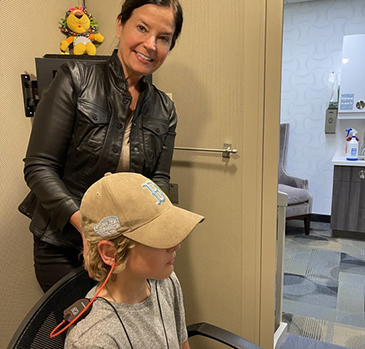
The Ear & Hearing Clinic is the Infant Hearing Program location for Waterloo Region. We see children of all ages both through this program and privately.
All children born in Ontario are eligible for hearing screening. Locally, this may take place in the hospital or at a KidsAbility location. If your child fails their infant hearing screening or if there are medical concerns that are known to sometimes be associated with hearing loss, they will be referred to us.
If there is ever concern about a child’s hearing, it is a good idea to have their hearing tested. Often concerns arise because of delays in speech and language development, frequent ear infections, or behavioural difficulties. Even if you do not have strong concerns about your child’s hearing, it is a good idea to set them up for success by having their hearing checked before school entry.
The Ontario Infant Hearing Program (IHP)
The Ontario Infant Hearing Program (IHP) is a province-wide program of the Ministry of Children and Youth Services. Every year in Ontario, nearly four in 1,000 babies are born deaf or hard of hearing. Finding out early means that they can get the help they need right away.
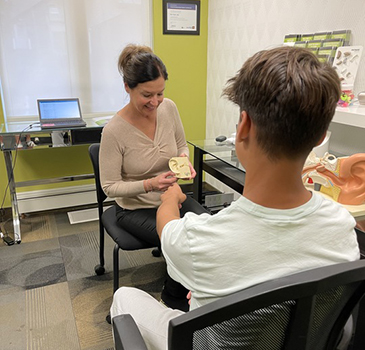
Ear and Hearing Clinic audiologists are the region’s pediatric experts! From birth through age 18, children have different needs than adults when it comes to their hearing health.
Every year in Ontario, nearly four in 1,000 babies are born deaf or hard of hearing. More lose their hearing later as they grow. Many of these children may need to learn speech and language differently, so it’s important to detect hearing loss as early as possible.
How to Prepare Your Child for a Hearing Test (Ages 7 Months to 5 Years)
Preparing your child for a pediatric hearing test reduces anxiety, improves cooperation, and ensures accurate diagnostic results. Children who know what to expect are more comfortable during testing, allowing audiologists to obtain reliable data without requiring follow-up appointments.
Quick Checklist: 7 Steps to Prepare Your Child
Schedule for peak alert times: Book appointments during windows when your child is well-rested, fed, and attentive.
Bring soothing items and quiet distractions: Pack a favorite toy, comfort item, snack, or a mobile device pre-loaded with quiet videos.
Arrange separate childcare for siblings: Parent participation is required during testing (holding or engaging the child). Clinics typically cannot provide childcare.
Desensitize ear contact: Practice placing non-tight headphones or earbuds on your child while they engage in enjoyable activities. Keep volumes low.
Practice speech recognition games:
For older toddlers: Have them repeat target words (e.g., “Say baseball,” “Say hotdog“).
For younger toddlers: Practice pointing to body parts upon request (e.g., “Where is your nose?”).
Build sound awareness: Point out ambient environmental noises daily (e.g., “Listen, do you hear the telephone?”).
Play the “Listening Game” (Conditioned Play): Cover your mouth, make a soft “beep beep” sound, and teach your child to perform an action (such as dropping a block into a bucket) every time they hear it.
What Happens During a Pediatric Hearing Test?
Objective Assessments (All Ages)
Otoscopy: The audiologist inspects the ear canal and eardrum visually.
Tympanometry & Middle Ear Testing: A soft rubber or foam tip is inserted into the ear canal to measure middle ear function and pressure. This requires the child to remain still for several seconds.
Pure Tone Audiometry
Target Age: 4 years and older (or when reliable behavioral responses are achieved).
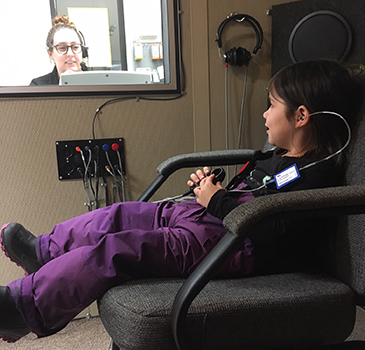
Test Procedure: The child listens to tones of varying pitch and volume through headphones and responds directly by raising a hand, pressing a button, or saying “yes.”
Visual Reinforcement Audiometry (VRA)
Target Age: 7 months to 2 years (or when a child can sit unsupported and turn their head).
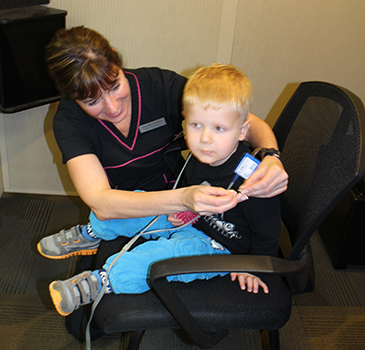
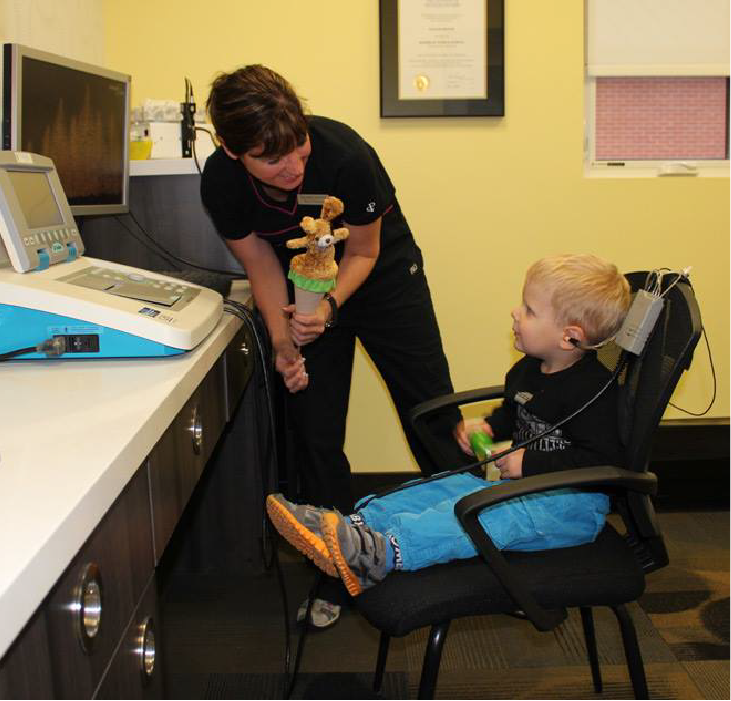
Test Procedure: The child sits on a parent’s lap in a sound booth. Sounds are presented through speakers or insert earphones. When the child turns toward the sound, they are rewarded with illuminated or animated toys.
Parent’s Role: Hold the child securely and gently prevent them from pulling off ear inserts.
Conditioned Play Audiometry (CPA)
Target Age: 2 to 4 years.
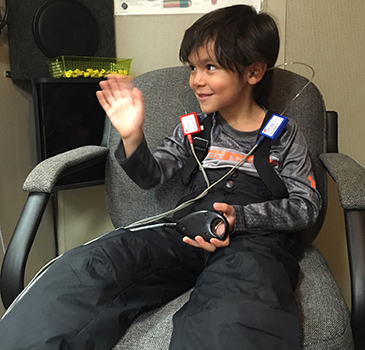
Test Procedure: The child wears headphones or insert earphones. The audiologist trains the child to perform a turn-taking task (e.g., placing a peg in a board or dropping a block in a bucket) immediately upon hearing a tone or sound.
Parent’s Role: Act as an assistant by handing toys to the child or offering gentle encouragement.
Book Your Hearing Health Check Appointment
Book your appointment by calling or texting 1-833-669-4425.